

Mollies DIY Blog
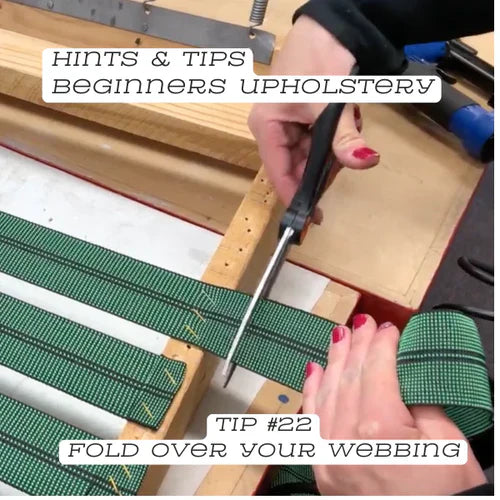
Upholstery Tip #22: Fold the Ends of Your Webbing
Learn about a tiny but very important detail when it comes to folding ends of your webbing — which will immensely improve the standard of your upholstery job. Follow these...
Upholstery Tip #22: Fold the Ends of Your Webbing
Learn about a tiny but very important detail when it comes to folding ends of your webbing — which will immensely improve the standard of your upholstery job. Follow these...

What are twist pins and how do you use them?
For DIYers looking for a simple way to keep car headlining, chair covers or armrest protectors in place, twist pins are the unsung heroes. Their uncomplicated design and resistance to rust...
What are twist pins and how do you use them?
For DIYers looking for a simple way to keep car headlining, chair covers or armrest protectors in place, twist pins are the unsung heroes. Their uncomplicated design and resistance to rust...
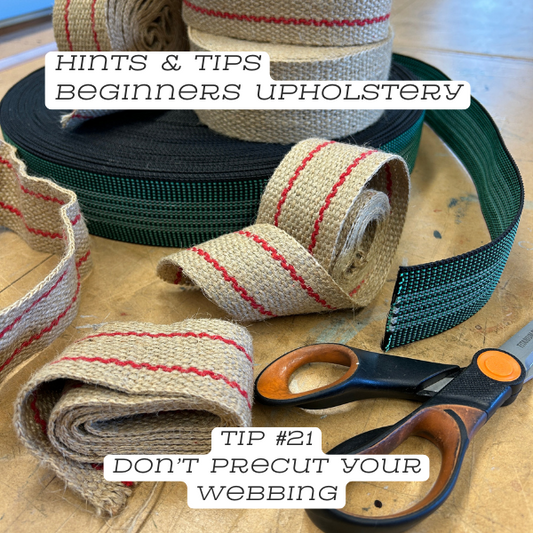
Upholstery Tip #21: Don't precut your webbing
When working with upholstery webbing, avoid pre-cutting it into equal lengths. This approach is actually unnecessary, time-consuming and wasteful. Upholsterers have a far more efficient method that speeds up the process and...
Upholstery Tip #21: Don't precut your webbing
When working with upholstery webbing, avoid pre-cutting it into equal lengths. This approach is actually unnecessary, time-consuming and wasteful. Upholsterers have a far more efficient method that speeds up the process and...

Differences between Reupholstery and Recovery
When it comes to reviving worn-out furniture, two terms frequently emerge: reupholstery and recovering. Although they may seem interchangeable at first, they refer to distinct processes that can transform the...
Differences between Reupholstery and Recovery
When it comes to reviving worn-out furniture, two terms frequently emerge: reupholstery and recovering. Although they may seem interchangeable at first, they refer to distinct processes that can transform the...

Upholstery Tip #19: Weave your webbing
When you’re working on your next upholstery project, take the time to weave the webbing properly—unless, of course, your chair’s design calls for something different. A well-crafted foundation is key...
Upholstery Tip #19: Weave your webbing
When you’re working on your next upholstery project, take the time to weave the webbing properly—unless, of course, your chair’s design calls for something different. A well-crafted foundation is key...

Upholstery Tip #20: Webbing Chair Backs & Arms
When it comes to webbing on the back of a chair or inside arms and wings, it’s a little different from the seat. Unlike seats, where you often weave horizontal...
Upholstery Tip #20: Webbing Chair Backs & Arms
When it comes to webbing on the back of a chair or inside arms and wings, it’s a little different from the seat. Unlike seats, where you often weave horizontal...

Upholstery Tip #18 Choosing your Foundation Layer
Just like a building, an upholstered chair needs a strong foundation. The foundation isn't just about making sure the chair looks good; it’s what holds up the stuffing, the fabric,...
Upholstery Tip #18 Choosing your Foundation Layer
Just like a building, an upholstered chair needs a strong foundation. The foundation isn't just about making sure the chair looks good; it’s what holds up the stuffing, the fabric,...

Understanding upholstery foam grades
Upholstery foam plays a crucial role in providing comfort and support to furniture. It's essential to have a good understanding of upholstery foam and how to choose the right one...
Understanding upholstery foam grades
Upholstery foam plays a crucial role in providing comfort and support to furniture. It's essential to have a good understanding of upholstery foam and how to choose the right one...

Upholstery Tip #17 Clean up the surface
The visible parts of furniture frames should be tidied up before you begin your reupholster project. If you don't, the new fabric might get ruined if refinishing is done later!
Upholstery Tip #17 Clean up the surface
The visible parts of furniture frames should be tidied up before you begin your reupholster project. If you don't, the new fabric might get ruined if refinishing is done later!
Monthly Upholstery Tip Series
View all-
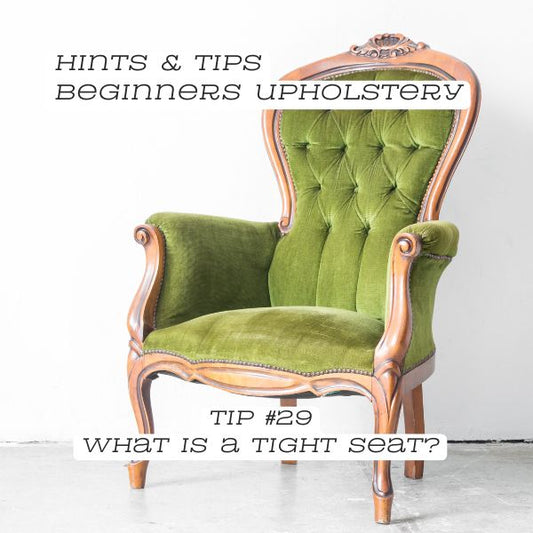
Upholstery Tip #29: What is a tight seat?
A tight seat has no removable cushion. It’s shaped with springs or stuffings beneath a fabric top that’s fixed directly to the frame.
Upholstery Tip #29: What is a tight seat?
A tight seat has no removable cushion. It’s shaped with springs or stuffings beneath a fabric top that’s fixed directly to the frame.
-

Upholstery Tip #28: Loose Seat Springing
Loose seat chairs have a separate cushion over a sprung base. Here’s how to build a firm, level foundation to support it properly.
Upholstery Tip #28: Loose Seat Springing
Loose seat chairs have a separate cushion over a sprung base. Here’s how to build a firm, level foundation to support it properly.
-

Upholstery Tip #27: How to Position the Knot
There’s a simple trick to positioning furniture seating coil springs that can help your chair last longer and save someone from a painful surprise.
Upholstery Tip #27: How to Position the Knot
There’s a simple trick to positioning furniture seating coil springs that can help your chair last longer and save someone from a painful surprise.

